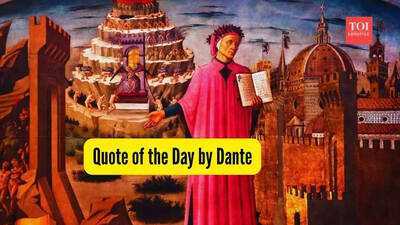
Dante Alighieri was one of the most important writers of the late Middle Ages. Many people think he is the father of the Italian language. His life, works, and impact go far beyond literature. They have shaped philosophy, theology, and even the way people think about culture today.
Dante was born in Florence in 1265, a busy city for business, politics, and art. The city was politically unstable when he was a child, with two groups fighting for power: the Guelphs and the Ghibellines. Dante was a member of the Guelphs, who were on the Pope's side. There were even splits between the White and Black Guelphs within that group. Dante was on the side of the White Guelphs, who didn't want the Pope to have too much power in politics. These political fights would shape a lot of his life in the end.
Beatrice Portinari was one of the most important people in Dante's life. Even though he didn't talk to her much, she became a lasting symbol of divine love and spiritual inspiration in his writing. La Vita Nuova ("The New Life"), one of his first works, shows this idealised love and marks the start of his writing career.
Dante was a poet and also involved in politics. He held a number of public positions in Florence, including prior, which was one of the city's highest magistrates. But in 1302, when the Black Guelphs took over Florence with the help of Pope Boniface VIII, Dante was forced to leave the city. This exile changed his life forever. He never went back to Florence and spent the rest of his life wandering around different Italian courts, relying on the support of nobles.
Dante wrote his best work, the Divine Comedy, while he was in exile. There are three parts to this epic poem: Inferno, Purgatorio, and Paradiso. It is written in Italian instead of Latin. It tells the story of a symbolic journey through Hell, Purgatory, and Heaven, first with the help of the Roman poet Virgil and then with the help of Beatrice. The poem is both a deeply personal spiritual journey and a broader look at politics, morality, and human nature.
Dante's writing style was very new. He wrote in the Tuscan dialect of Italian at a time when Latin was the language of serious writing. This choice helped raise the vernacular language to a literary level, which eventually had an effect on how modern Italian grew. His poetry was more musical and well-structured because he used terza rima, a complicated rhyme scheme (aba bcb cdc...).
His writing is full of strong images, strong emotions, and deep ideas. Dante, for example, writes about Hell's punishments in Inferno in a way that makes them unforgettable. Each punishment is based on the sins of the damned. These punishments are examples of the principle of contrapasso, which says that the punishment should be a mirror of the sin. His detailed and creative descriptions made abstract religious ideas easy to understand and interesting to read.
Dante's writing also combines different fields of study. It has parts of classical literature, Christian theology, philosophy, and science from the Middle Ages. His structured moral universe shows that he was influenced by philosophers like Aristotle and Thomas Aquinas. This combination of knowledge shows how people thought in the Middle Ages, but it also goes beyond that.
Dante's work has had a huge and lasting effect. Many people think that The Divine Comedy is one of the best books ever written. It has had an effect on many writers, artists, and thinkers over the years. Dante's themes, structure, and imagery have inspired writers from Geoffrey Chaucer and John Milton to modern authors.
Dante's idea of the afterlife has affected how people think about culture and religion as well as literature. Dante's imagination has had a bigger impact on many modern ideas about Hell than official religious teachings. For example, Hell is said to have layers and punishments that are very vivid. His work also helped people move from mediaeval to Renaissance ways of thinking by focusing on personal experience and emotional depth.
Dante passed away in Ravenna in 1321, still in exile from Florence. Even so, his legacy grew stronger after he died. Florence, which had once kicked him out, later realised how great he was and tried to honour him, but they never got his body back.
In the end, Dante Alighieri was more than just a poet; he was a visionary who changed language and literature. He fought for political power, was devoted to his family, and wanted to learn more. His writing style was both beautiful and complicated, which made it both easy to understand and deep. Most importantly, his work still has an effect on people today. The Divine Comedy is still a key text in literary studies and a timeless look at what it means to be human.
Quote of the Day
One of the most iconic lines of Dante is, “Consider your origin. You were not formed to live like brutes but to follow virtue and knowledge.” Dante Alighieri is one of the most important writers from the late Middle Ages. People often call him the "father of the Italian language." His life, works, and influence extend well beyond literature. They have changed how people think about culture, philosophy, and theology.
Dante was born in Florence in 1265. It was a busy city for trade, politics, and art. When he was young, the politics of the city were very unstable. There were two groups, the Guelphs and the Ghibellines, that fought for power. Dante was a Guelph, which means he was on the Pope's side. But even within that group, there were differences between the Black and White Guelphs. Dante was on the side of the White Guelphs, who didn't want the Pope to have too much power over politics. These political fights would have a big effect on his life.
Dante's life was greatly affected by Beatrice Portinari. He didn't talk to her much, but she became a lasting symbol of divine love and spiritual inspiration in his writing. His first book, La Vita Nuova ("The New Life"), shows this idealised love and marks the beginning of his writing career.
Dante was both a poet and a politician. He worked for the city of Florence in a number of public roles, including prior, which was one of the city's highest magistrates. The Black Guelphs took over Florence in 1302 with the help of Pope Boniface VIII, and Dante had to leave the city. This exile had a big impact on his life. He never went back to Florence. Instead, he spent the rest of his life wandering from court to court in Italy, relying on the help of nobles.
While he was in exile, Dante wrote his best work, the Divine Comedy. This long poem is in Italian, not Latin, and it has three parts: Inferno, Purgatorio, and Paradiso. It tells the story of a journey through Hell, Purgatory, and Heaven that is meant to be a metaphor. At first, Virgil, a Roman poet, leads the way, and then Beatrice. The poem is both a personal spiritual journey and a larger commentary on politics, morality, and human nature.
Dante's style of writing was very new. He decided to write in the Tuscan dialect of Italian when Latin was the language of serious writing. This choice helped the vernacular language become more literary, and it eventually changed the way people speak modern Italian. He used terza rima, a difficult rhyme scheme (aba bcb cdc...), to make his poems sound and look better.
People know him for his writing that has strong feelings, clear pictures, and deep thoughts. In Inferno, for example, Dante paints pictures of Hell's punishments that will stay with you forever. Each one is based on the sins of the damned. Contrapasso is the idea behind these punishments. It says that the punishment should be a symbol of the sin. His detailed and imaginative descriptions made abstract theological ideas clear and interesting to people who read them.
Contact to : xlf550402@gmail.com
Copyright © boyuanhulian 2020 - 2023. All Right Reserved.