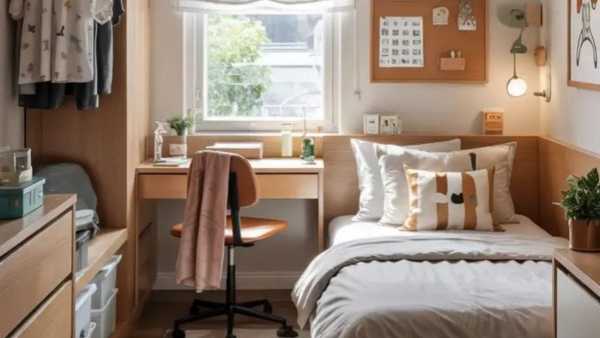
New Delhi: In small urban homes, it’s easy to assume that the biggest challenge is the lack of space. But parents, designers, and child-development experts often agree that the issue is rarely space itself, but how that space is used. Children’s areas tend to get buried under toys, spill over into adult corners, or become a constant negotiation between order and chaos. What’s missing is intention – an environment that respects how children explore, learn, and build independence.
Today’s modern homes demand smarter solutions, ones that reduce clutter, minimise parental intervention, and help children grow with confidence. Prakriti kundaliya, Founder, Wud Studio, shares that the goal is simple: create child-friendly spaces that work with the natural rhythms of childhood rather than against them.
Rethinking space accessibility
One of the most impactful shifts in child-centric design is moving from closed storage to low, open shelves. Instead of stacking toys and books in high cupboards, placing a limited, thoughtfully chosen set at the child’s height allows them to independently access what they want and put it back.
This single change supports responsibility, reduces mess, and creates a sense of ownership. And in homes where carving out a separate children’s room isn’t possible, even a small floor mat works as a visual cue. It tells the child, “This is your activity zone,” helping them anchor their attention within a shared space.
Designing for Everyday Independence
Much of the frustration at home comes from repeated, avoidable friction. A school bag placed too high, a water bottle stored in a deep shelf, or everyday items scattered around the home often mean one thing: the child constantly needs an adult.
Introducing child-scaled elements, a low hook for bags, a tiny accessible table, and a basket for essentials, turns daily routine into moments of empowerment. Suddenly, the child can manage their belongings without being lifted or assisted. These subtle design choices build self-reliance and ease the load on parents.
Children thrive on meaningful, real-world tasks. That’s why integrating simple, practical life setups can make a world of difference. A water-pouring station with a small jug and glass or a tray with cloths for folding helps children build motor skills, concentration, and confidence.
These setups don’t require separate rooms or expensive furniture, they simply require intent. They transform ordinary tasks into opportunities for deep, focused learning.
Creating a calm corner for emotional balance
Every child needs a pause, a moment of quiet reflection, especially in busy homes. Even in tight layouts, a calm corner is easy to create—a soft cushion, warm lighting, and two or three familiar books are enough to shape a comforting little sanctuary.
This kind of space helps children understand their emotions, self-regulate, and find comfort without needing adult-led soothing every time.
At Wüd Studio, designers view small homes not as a limitation but as an opportunity. With thoughtful choices, even compact layouts can support independence, reduce friction, and nurture a child’s natural curiosity. When spaces are built with clarity and intention, children learn to move through their world confidently, and parents experience a more harmonious daily routine.
Contact to : xlf550402@gmail.com
Copyright © boyuanhulian 2020 - 2023. All Right Reserved.