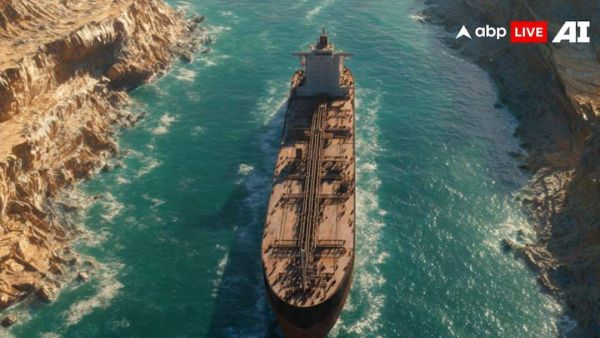
At first glance, last week's shipping numbers out of the Strait of Hormuz look reassuring: more vessels passed through one of the world's most watched energy chokepoints than the week before. Look a little closer, though, and the picture changes.
A big chunk of that extra traffic wasn't carrying cargo at all, and the ships that were sanctioned, or steering clear of standard routes, made up a growing share of everything moving through the strait, reported The Financial Express.
That's the read from maritime intelligence firm Kpler, cited by the news report, which tracks vessel movements through Hormuz and other key waterways on a weekly basis.
What the headline number hides
In the week ending 23 August, confirmed crossings through Hormuz rose 2.5% to 121, Kpler's data showed, on paper, a modest recovery. But cargo-carrying transits, the movements that actually matter for trade, fell 27% over the same period.
Kpler put it plainly: "Traffic edged higher through the Strait of Hormuz and Bab el-Mandeb last week, but headline volumes obscure contrasting risk signals."
Digging into who was actually doing the crossing tells its own story. Sanctioned vessels accounted for 16 crossings, nearly double the nine recorded the week prior. Meanwhile, ships routing themselves via Iran's unilateral scheme, rather than internationally recognised shipping lanes, made up 46.3% of all Hormuz traffic for the week.
Ships are moving. Trade, less so.
The disconnect between "more ships" and "more cargo" is the crux of what Kpler is flagging. As the firm put it, "commercial substance" appears to be "weakening at Hormuz even as overall traffic holds up", a gap between activity and actual economic movement that's easy to miss if you're only counting hulls.
It's not the first sign of turbulence in the strait recently. The week before this one was considerably rockier: confirmed crossings had fallen 19.5% to just 95, and on 16 August alone, traffic through Hormuz shrank to a mere three vessels. That day, not a single crossing was logged through the standard Hormuz Traffic Separation Scheme or via Omani routes, nearly everything moving through was either on Iran's unilateral scheme or on routes that couldn't be clearly identified at all.
Meanwhile, further south, a calmer story
While Hormuz wobbled, Bab el-Mandeb, the narrow waterway linking the Red Sea to the Gulf of Aden, had a comparatively steady week. Crossings rose 3.1% to 269, more than double Hormuz's tally, according to Kpler. Dark transits, vessels sailing without broadcasting their location, actually declined. Sanctioned and shadow-fleet crossings held roughly flat at a combined 74 ships.
Two chokepoints, two different weeks
Put side by side, the data from the two waterways diverge sharply. Bab el-Mandeb shrugged off an active threat environment and kept moving at a fairly consistent clip. Hormuz, on the other hand, saw its traffic composition tilt further towards sanctioned and Iran-routed vessels, even as the actual cargo passing through it shrank. For one of the world's most closely watched energy corridors, that's the kind of detail that tends to matter more than the topline number.
Contact to : xlf550402@gmail.com
Copyright © boyuanhulian 2020 - 2023. All Right Reserved.