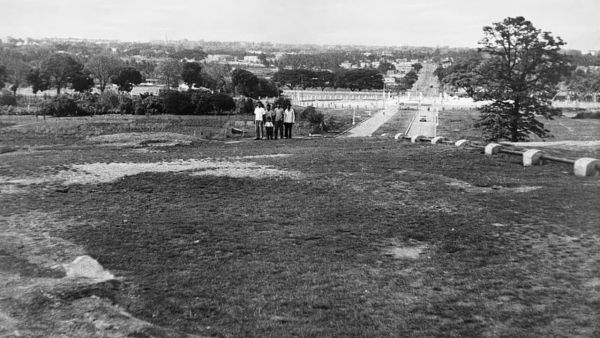
Bengaluru’s KH Road, popularly known as Double Road, has a fascinating history dating back to the 1950s. From a mud track to a major city road, its transformation reflects Bengaluru’s rapid growth and changing urban landscape.
Some of Bengaluru’s most familiar names carry stories that go back decades. One such name is ‘Double Road’, which instantly rings a bell with old Bengalureans and auto drivers, even though the road is officially known as KH Road. Today, it is a busy stretch filled with traffic, shops and commercial establishments. But decades ago, the road looked very different. So, how did KH Road come to be known as ‘Double Road’, and what does this popular name tell us about Bengaluru’s transformation from a quiet garden city into the bustling metropolis it is today?
What's The Link Between KH Road And Double Road?
KH Road is one of Bengaluru’s well-known arterial roads, stretching from the East Gate of Lalbagh to Richmond Circle and passing through neighbourhoods such as Wilson Garden and Sudhama Nagar.
The road is officially named after Kengal Hanumanthaiah, who served as the Chief Minister of Mysore State and played an important role in the development of Bengaluru.
However, for generations of Bengalureans, the name ‘Double Road’ has remained more familiar in everyday conversations. Even today, many auto drivers and long-time residents immediately recognise the destination when someone simply says ‘Double Road’.
But the name is not merely a nickname. It is linked to the way the road was developed several decades ago.
A 1950s Makeover Changed Everything
The name ‘Double Road’ reportedly became popular in the early 1950s, when the area began undergoing significant development.
At the time, the route was largely a mud track. As the city expanded, the corporation undertook work to develop the road and divided it into two carriageways. This distinctive layout is believed to have led residents to start referring to it as ‘Double Road’.
Residential plots were also developed on either side of the road. The surrounding neighbourhood looked very different from the Bengaluru of today, with spacious bungalows, gardens and relatively quiet streets.
There was little of the heavy traffic, commercial activity and high-rise development that now characterise this part of the city.
Importance Grew As Jayanagar Developed
Bengaluru’s growth towards the south gave Double Road greater importance. As new residential layouts began developing, the road became an important connecting route between different parts of the city.
Jayanagar, in particular, emerged as one of the prominent residential areas in south Bengaluru. As connectivity improved, Double Road became an increasingly important route for people travelling towards the expanding southern neighbourhoods.
The development of roads and residential areas also contributed to the growing value of land in the surrounding localities. What had once been a relatively undeveloped stretch gradually became part of a rapidly urbanising Bengaluru.
A Road Linked To Bengaluru's Royal Memories
Double Road is also associated with memories of Bengaluru’s visits by prominent personalities and dignitaries.
One frequently recalled story relates to Queen Elizabeth II’s visit to Bengaluru in 1961. Local accounts remember the British monarch travelling through parts of the city in a horse-drawn carriage during her visit.
The road’s proximity to Lalbagh also made it a notable route through which residents could catch glimpses of VIPs and other important visitors.
However, such recollections form part of Bengaluru’s oral history, and specific details about the exact route taken during the royal visit should be independently verified before being presented as established historical fact.
From A Mud Track To A Busy Bengaluru Road
The story of Double Road mirrors the larger transformation of Bengaluru. What was once a simple mud track gradually became an important road as the city expanded and new neighbourhoods developed.
Over the decades, the quiet bungalows and gardens that once surrounded the road have increasingly made way for commercial establishments, busy junctions, constant traffic and Bengaluru’s modern urban landscape.
Yet, despite all these changes, the name ‘Double Road’ has survived.
For older Bengalureans, it is more than just an alternative name for KH Road. It is a small piece of the city’s history, carrying memories of a time when Bengaluru was smaller, greener and far quieter than the bustling metropolis it is today.
Contact to : xlf550402@gmail.com
Copyright © boyuanhulian 2020 - 2023. All Right Reserved.