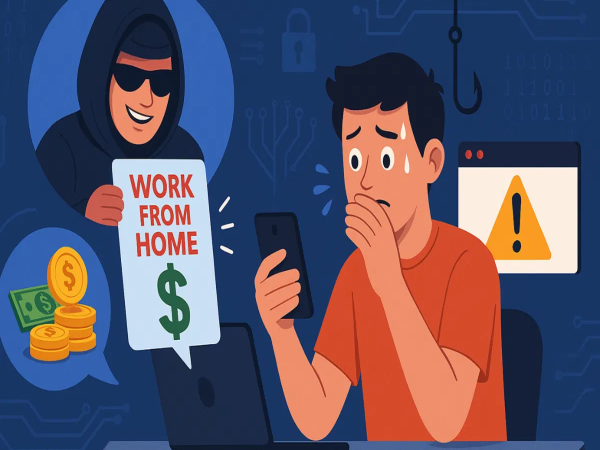
Attracted by the 'work-from-home' option, a woman from Gurugram applied online for a job with a fashion retailer. She subsequently received a WhatsApp message containing job details and a registration link. She was persuaded to deposit money under the pretext of account activation and completing online tasks. It was only after losing approximately two lakh rupees that she realized she was a victim of an online scam. Similarly, an entity named 'Bharatiya Rozgar Sanstha' swindled ₹87,000 from a woman in Indore under the guise of securing her a job.
Similar job scams involving WhatsApp and Telegram have also been reported in Hyderabad and Tamil Nadu. On LinkedIn, a fake recruiter sent a young man a link to download a seemingly innocuous document for a job interview; the file turned out to contain malicious software. Within hours, hackers drained his bank account.
In reality, the process of searching for a new job has moved almost entirely online. In a fiercely competitive job market crowded with applicants, no one wants to miss an opportunity; consequently, many young people feel they cannot afford to be skeptical of online recruitment offers, fearing that such chances are rare. This anxiety among unemployed youth creates an easy opening for online fraudsters and cybercriminals. As a result, fraudulent recruitment agencies—using fake job advertisements and fabricated appointment letters—are not only causing financial loss to unemployed youth but also robbing them of their time and trust.
According to the 'Global Anti-Scam Alliance,' 70 percent of adults worldwide encounter scams annually. The Ministry of Labour and Employment also advises applicants to remain vigilant against such scams and to avoid blindly trusting individuals who promise employment in exchange for money or financial gain. The National Career Service (NCS) portal never charges any fees for registration, job applications, or interviews. People should be wary of suspicious calls, messages, emails, or fake recruitment offers—especially those demanding personal details, confidential information, or direct payments.
**How people fall for job offer scams**
Research by LinkedIn indicates a need for greater vigilance regarding the legitimacy of job offers. Approximately three-quarters (72%) of professionals surveyed consider the authenticity of a job before applying, while 57% are more likely now than a year ago to question whether a job posting might be a scam. A major "red flag" arises when a recruiter asks to move the conversation from LinkedIn to a personal chat app; 90% of job scams occur after shifting to private messaging platforms. In such instances, LinkedIn’s security tools cannot protect you, nor can the authenticity of the account be verified. The real danger stems from a combination of a lack of information and external pressure.
**Common job-related scams**
1. **Fake job listings:** Despite employer verification systems on most job sites, scammers sometimes manage to post fake listings. Such listings are most prevalent on social media. They often ask young job seekers to pay a fee to complete an application or start work.
2. **Fraud:** In job-related scams, fraudsters often impersonate representatives from agencies, government bodies, or hiring firms. They frequently induce candidates to transfer money under the guise of "screening fees."
3. **Emails:** Inboxes are often flooded with emails from individuals claiming to be recruiters. They harvest resumes from job boards. While some emails originate from genuine recruiters, most are linked to scams. They often solicit sensitive information, such as identity details or bank account numbers.
4. Interviews via online messaging services: You are informed that you have been selected from a final list—often for a position you never even applied for. They insist on using messaging services to arrange the interview, during which they harvest your personal information. This is where the real danger begins.
5. Credit reports: Scammers claim that a credit history check is mandatory to finalize the job. Under the guise of assessing your financial responsibility, they gain access to your private information. They often extract payments or levy bogus charges.
6. Career consulting: If someone posing as a career consultant offers to improve your resume, it could lead to new problems for you.
7. Work-from-home jobs: Demand for these has surged in recent years. Scammers target individuals seeking remote work. Often, job seekers are persuaded to pay fees or purchase equipment. You could also be defrauded through demands for initial registration fees or commissions.
8. Government jobs: If money is demanded to secure a better position in a government job, it is likely a scam.
Recognize the warning signs.
Unsolicited calls: Be cautious if someone calls repeatedly or pressures you to accept a job offer.
Unprofessional emails: Scam emails often contain obvious errors and lack essential details like contact information.
Fake accounts and websites: Scammers typically create online platforms or channels for a fake employer; these often lack necessary details.
Requests for personal information: Scammers frequently ask for your personal details early on. Promising a direct connection, they solicit important documents.
Tips to protect yourself from job scams
Trust your instincts: Trust your judgment if you have doubts about a job offer or a company. If you feel uncertain, uneasy, or sense danger, steer clear of it. Do your research: Thoroughly research the company before applying so you are familiar with its background. Check the company's official website and social media pages.
Check the website: Ensure the company's web address begins with "https://" rather than "http://." This confirms that the site is authentic and secure. You can verify its legitimacy by entering the URL into domain age checkers or website registry tools.
Protect personal information: Avoid sharing details like your bank account, credit card number, Aadhaar number, or other sensitive information with strangers. Legitimate companies never ask for payment card details; there is no reason for them to request such information when hiring you.
Check company reviews: Job portals often feature review sections where employees and candidates share their experiences with the company. This can help you make an informed decision.
Contact to : xlf550402@gmail.com
Copyright © boyuanhulian 2020 - 2023. All Right Reserved.