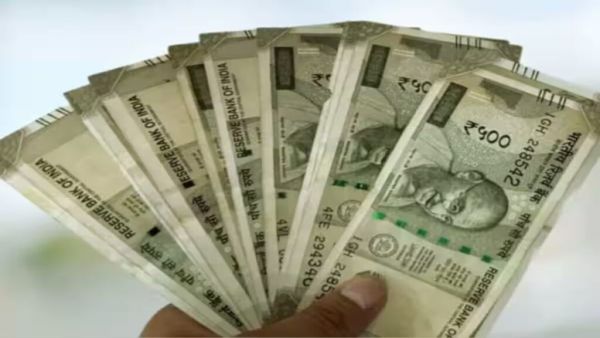
EMI of those taking loan to buy a house or car may increase in the coming months. The research report of State Bank of India (SBI) has estimated that the Reserve Bank of India (RBI) may increase the Repo Rate by 0.25% in the October Monetary Policy. After this, a similar increase has been predicted in December also. That means overall repo rate may increase by 0.50%.
In the SBI report, rising inflation and crude oil prices have been cited as the main reasons behind this. Amidst the tension in West Asia, the price of crude oil in the international market has crossed $ 100 per barrel in 15 days. There is also a possibility of it going from 105 to 123 dollars. In such a situation, the challenge for RBI to control inflation may increase.
First understand, what effect will increasing repo rate have on your pocket?
Repo rate is the rate at which RBI lends money to banks for short periods of time. It plays an important role in the banking system, because the interest rates of many types of loans are decided on the basis of the rates linked to it. If the repo rate increases then the interest rate on Floating Rate Loan may increase. This may affect the EMI of home loan, car loan and personal loan. However, it generally does not have a direct impact on those taking Fixed Rate Loans. On the other hand, customers who have bank FD can get benefits. After increasing the repo rate, banks can also move towards giving more interest on deposits.
Why did SBI express fear of increasing repo rate?
- Crude oil crosses 100 dollars
According to SBI report, the prices of crude oil have increased due to the ongoing tension in West Asia. Crude oil has crossed the level of $ 100 per barrel in the international market. It is expected to reach 105 to 123 dollars. India fulfills a major part of its requirement through import of crude oil. Therefore, if oil becomes expensive, the cost of transportation and freight along with petrol and diesel may increase. This may also affect the prices of other commodities.
- Inflation of essential goods increased
It has been told in the report that the number of essential commodities having 90% share in CPI i.e. Consumer Price Index was 22 in January 2026. By July this number increased to 53. Increase in manufacturing cost of petrol-diesel, gas, medicines and electronics can also have an impact on inflation. For this reason, SBI has advised RBI to consider increasing interest rates to control inflation.
- The decision will not be taken by American policies but by domestic situation.
According to the SBI report, the decision to increase the repo rate will not be based only on America's policies. RBI will take the decision keeping in mind the inflation, economic situation and other economic indicators within the country.
RBI had kept the rate at 5.25% in August
In the Monetary Policy Committee (MPC) meeting held in August, RBI had kept the Repo Rate stable at 5.25% for the fourth consecutive time. Now the next MPC meeting is to be held between 5 to 7 October. According to SBI estimates, there may be an increase of 0.25% in October and again by 0.25% in December. However, the final decision will be taken only by the MPC of RBI.
Understand the whole game of repo rate in 7 questions
Question: What is the repo rate?
Answer: This is the interest rate at which RBI gives short term loans to banks. It is reviewed by MPC.
Question: Why can EMI increase if repo rate increases?
Answer: The interest rate of loans whose interest rate is linked to the repo rate may increase. Due to this, there is a possibility of EMI increasing or loan tenure becoming longer.
Question: Why do FD holders benefit from increase in repo rate?
Answer: During the rise in interest rates, banks can give more interest on FD and other Deposit Schemes.
Question: How does the tension in West Asia affect India?
Answer: This may make Crude Oil expensive. India imports a large part of oil, so expensive oil may increase fuel and transportation costs.
Question: Why does RBI increase the repo rate when inflation increases?
Answer: Expensive loans can reduce the pace of debt and expenditure. This reduces the demand pressure in the market and helps in controlling inflation.
Question: Why is it difficult to reduce the repo rate in times of inflation?
Answer: If you get a cheap loan, money and expenses in the market may increase. Due to this, there is a danger of inflation increasing again.
Question: When can interest rates be reduced again?
Answer: When inflation comes under control and the economic situation seems favorable to RBI for reducing the rates, then the Repo Rate can be cut. RBI reviews Inflation, Economy and Global Conditions in every MPC meeting.
Don't forget to follow Read.Com's WhatsApp channel.

Contact to : xlf550402@gmail.com
Copyright © boyuanhulian 2020 - 2023. All Right Reserved.