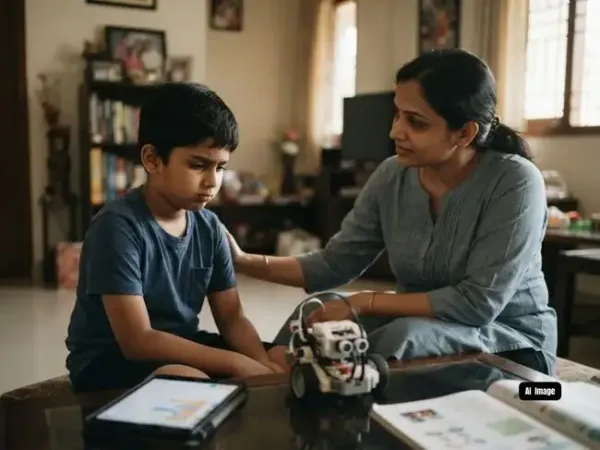
A viral video questions modern parenting, asking whether parents are teaching children coding and maths but failing to prepare them to handle disappointment, rejection and failure.
In an age when parents are increasingly focused on academic performance, coding classes, competitive exams and extracurricular activities, an important life skill may be getting overlooked: teaching children how to deal with disappointment. A video circulating on social media has sparked a conversation about modern parenting and the tendency to protect children from even the smallest difficulties. The speaker in the video raises a question that many parents may find uncomfortable: Are we preparing children for life, or simply making sure they never have to experience anything unpleasant?
Also Read: Delhi thieves buy Diljit Dosanjh's Ahmedabad concert gold ticket to target rich people, steals 11 phones worth Rs 4.3 lakh
The video highlights everyday situations that parents can easily relate to. A child gets bored, and a phone is handed over. They lose a game, and parents immediately reassure them that they are the best. A teacher reprimands them, and instead of allowing the child to understand what went wrong, parents consider confronting the teacher.
Even when children struggle to complete a simple task, adults often step in and finish it for them. Individually, these actions may appear harmless. After all, most parents want to see their children happy. However, the speaker argues that constantly removing obstacles can prevent children from developing the ability to handle difficult situations independently.
For instance, if a child loses a competition, parents can help them understand that losing is part of participating. If they receive criticism from a teacher, they can encourage the child to reflect on the feedback rather than immediately questioning the teacher's actions. Similarly, when children have disagreements with friends, they can be encouraged to communicate and resolve their differences before adults intervene. These everyday experiences can help children develop patience, confidence and problem-solving abilities.
Also Read: Delhi thieves buy Diljit Dosanjh's Ahmedabad concert gold ticket to target rich people, steals 11 phones worth Rs 4.3 lakh
The video highlights everyday situations that parents can easily relate to. A child gets bored, and a phone is handed over. They lose a game, and parents immediately reassure them that they are the best. A teacher reprimands them, and instead of allowing the child to understand what went wrong, parents consider confronting the teacher.
Even when children struggle to complete a simple task, adults often step in and finish it for them. Individually, these actions may appear harmless. After all, most parents want to see their children happy. However, the speaker argues that constantly removing obstacles can prevent children from developing the ability to handle difficult situations independently.
'We are confusing protecting our children with preparing them'
One of the strongest points made in the video is the difference between protecting children and preparing them for adulthood. The speaker asks parents to imagine their children 20 years from now. What happens when a 25-year-old faces criticism from a manager? How will they react when they fail a job interview or when their closest friend disappoints them?Parents can't always step in to resolve these problems. The speaker suggests that children who rarely experience setbacks while growing up may find it difficult to deal with rejection, criticism and uncertainty later in life. The message is not that parents should stop supporting their children. Instead, they should recognise that support does not always mean solving the problem. Sometimes, it means allowing children to face the situation, understand what happened and figure out their next move.
Why allowing children to struggle can be important
The speaker also acknowledges that watching a child feel upset is difficult for any parent. The natural reaction is to intervene, offer reassurance or find an immediate solution. However, removing every uncomfortable experience may not necessarily be an act of love. Sitting beside a disappointed child, listening to their concerns and giving them the confidence to try again can be equally important.For instance, if a child loses a competition, parents can help them understand that losing is part of participating. If they receive criticism from a teacher, they can encourage the child to reflect on the feedback rather than immediately questioning the teacher's actions. Similarly, when children have disagreements with friends, they can be encouraged to communicate and resolve their differences before adults intervene. These everyday experiences can help children develop patience, confidence and problem-solving abilities.