The Sir Dorabji Tata Trust (SDTT) and the RD Tata Trust (RDTT) Thursday moved the Bombay High Court against Tata Sons and six of its directors, challenging the reappointment of N Chandrasekaran as executive chairman of the Tata Group’s holding company for a third five-year term. The trusts have also sought Rs 65 crore in damages.
Justice Abhay Ahuja is scheduled to hear the matter Friday.
Before approaching the court, the trusts passed resolutions approving the legal action by majority vote.
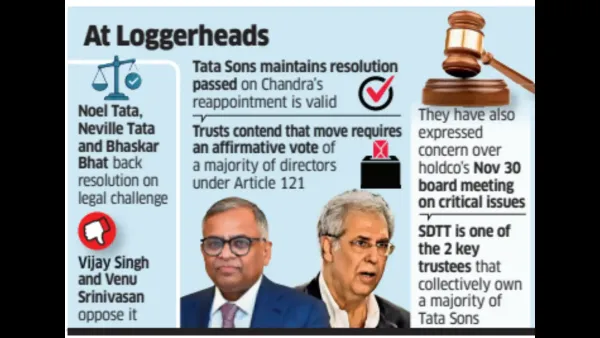
Tata Trusts chairman Noel Tata, his son Neville Tata, and Bhaskar Bhat voted in favour, while Vijay Singh and Venu Srinivasan opposed the move, people familiar with the development said.
In separate resolutions dated November 25, the two trusts sought their trustees’ approval to institute suits alleging that the Tata Sons board’s September 17 decision to reappoint Chandrasekaran was invalid because it did not receive the affirmative vote required under Article 121 of the company’s Articles of Association.
SDTT is one of the two principal trustees that collectively own a majority of Tata Sons.
The resolutions follow a disagreement over the appointment of N Chandrasekaran under Article 104B between Noel N Tata and Venu Srinivasan. Noel Tata voted against the proposal while Srinivasan supported it.
Harish Manwani, who presided over the board meeting, treated the two directors as equally divided and exercised a casting vote in favour of the reappointment.
“The Trust apprehends that, if the two trust directors vote differently, the board may purport to pass resolutions in the same manner, in contravention of Article 121. Hence, it is necessary to protect the interests of the trust by approaching the Hon’ble Bombay High Court for judicial redressal of the Trusts’/Trustees’ grievances on an urgent basis,” said the SDTT circular, which was passed by a majority.
In the case filed in the Bombay High Court, senior counsels Abhishek Manu Singhvi and Janak Dwarkadas, along with Indranil Deshmukh and Gathi Prakash Karrah of law firm Cyril Amarchand Mangaldas, are representing the trusts.
Senior advocates Harish Salve, Birendra Saraf and Zal Andhyarujina are representing Tata Sons and other respondents.
The petitions name Tata Sons, Chandrasekaran, executive director and chief financial officer Saurabh Agrawal, independent directors Harish Manwani and Anita George, and directors Venu Srinivasan and Noel Tata as defendants. Neither trust seeks relief against Noel Tata.
Tata Sons maintains that the passing of the resolution is valid. The trusts, however, contend that Article 121 requires an affirmative vote of a majority of the directors appointed under Article 104B who are present at the meeting and that a chairman’s casting vote cannot substitute for this requirement.
Casting Vote
The trusts have expressed concern over the next Tata Sons board meeting, scheduled November 30, which is expected to consider critical matters. They are concerned that resolutions could again be passed by a casting vote if the two trust-appointed directors disagree.
The SDTT, which holds 113,067 ordinary shares in Tata Sons, proposes filing its suit through trustee Bhaskar Bhat. The RDTT, which holds 8,838 ordinary shares, proposes filing its suit through authorised representatives Siddharth Sharma, chief executive officer of Tata Trusts; Rukshana F Savaksha, secretary and chief financial officer of RDTT; or Rishi Sharma, head of legal at Tata Trusts. Both trusts are among the seven trusts that constitute Tata Trusts under Tata Sons’ Articles of Association. The SDTT and Sir Ratan Tata Trust jointly exercise certain rights on behalf of the trusts, including appointing the two directors under Article 104B.
The SDTT seeks Rs 50 crore in damages, while the RDTT proposes Rs 15 crore, both with interest at 18% annually from the date of filing until payment. The trusts have sought declarations that the September 17 resolution was ultra vires the Articles of Association and invalid, illegal, null and void.
In their separate circulars, the trusts have said they want the court to restrain Tata Sons from acting on the reappointment decision and prevent the company from treating as passed any board resolution that does not receive the affirmative vote required under Article 121. The SDTT has sought an injunction against the chairman of any board meeting exercising a casting vote in a disagreement between the two trust-appointed directors.
Both trusts seek interim and ad-interim relief ahead of the November 30 board meeting, including orders preventing Tata Sons from passing or acting on resolutions that lack the prescribed affirmative votes.
Chandrasekaran’s current term expires on February 20, 2027. The proposed reappointment would extend his tenure by another five years.
Justice Abhay Ahuja is scheduled to hear the matter Friday.
Before approaching the court, the trusts passed resolutions approving the legal action by majority vote.
Tata Trusts chairman Noel Tata, his son Neville Tata, and Bhaskar Bhat voted in favour, while Vijay Singh and Venu Srinivasan opposed the move, people familiar with the development said.
In separate resolutions dated November 25, the two trusts sought their trustees’ approval to institute suits alleging that the Tata Sons board’s September 17 decision to reappoint Chandrasekaran was invalid because it did not receive the affirmative vote required under Article 121 of the company’s Articles of Association.
SDTT is one of the two principal trustees that collectively own a majority of Tata Sons.
The resolutions follow a disagreement over the appointment of N Chandrasekaran under Article 104B between Noel N Tata and Venu Srinivasan. Noel Tata voted against the proposal while Srinivasan supported it.
Harish Manwani, who presided over the board meeting, treated the two directors as equally divided and exercised a casting vote in favour of the reappointment.
“The Trust apprehends that, if the two trust directors vote differently, the board may purport to pass resolutions in the same manner, in contravention of Article 121. Hence, it is necessary to protect the interests of the trust by approaching the Hon’ble Bombay High Court for judicial redressal of the Trusts’/Trustees’ grievances on an urgent basis,” said the SDTT circular, which was passed by a majority.
In the case filed in the Bombay High Court, senior counsels Abhishek Manu Singhvi and Janak Dwarkadas, along with Indranil Deshmukh and Gathi Prakash Karrah of law firm Cyril Amarchand Mangaldas, are representing the trusts.
Senior advocates Harish Salve, Birendra Saraf and Zal Andhyarujina are representing Tata Sons and other respondents.
The petitions name Tata Sons, Chandrasekaran, executive director and chief financial officer Saurabh Agrawal, independent directors Harish Manwani and Anita George, and directors Venu Srinivasan and Noel Tata as defendants. Neither trust seeks relief against Noel Tata.
Tata Sons maintains that the passing of the resolution is valid. The trusts, however, contend that Article 121 requires an affirmative vote of a majority of the directors appointed under Article 104B who are present at the meeting and that a chairman’s casting vote cannot substitute for this requirement.
Casting Vote
The trusts have expressed concern over the next Tata Sons board meeting, scheduled November 30, which is expected to consider critical matters. They are concerned that resolutions could again be passed by a casting vote if the two trust-appointed directors disagree.
The SDTT, which holds 113,067 ordinary shares in Tata Sons, proposes filing its suit through trustee Bhaskar Bhat. The RDTT, which holds 8,838 ordinary shares, proposes filing its suit through authorised representatives Siddharth Sharma, chief executive officer of Tata Trusts; Rukshana F Savaksha, secretary and chief financial officer of RDTT; or Rishi Sharma, head of legal at Tata Trusts. Both trusts are among the seven trusts that constitute Tata Trusts under Tata Sons’ Articles of Association. The SDTT and Sir Ratan Tata Trust jointly exercise certain rights on behalf of the trusts, including appointing the two directors under Article 104B.
The SDTT seeks Rs 50 crore in damages, while the RDTT proposes Rs 15 crore, both with interest at 18% annually from the date of filing until payment. The trusts have sought declarations that the September 17 resolution was ultra vires the Articles of Association and invalid, illegal, null and void.
In their separate circulars, the trusts have said they want the court to restrain Tata Sons from acting on the reappointment decision and prevent the company from treating as passed any board resolution that does not receive the affirmative vote required under Article 121. The SDTT has sought an injunction against the chairman of any board meeting exercising a casting vote in a disagreement between the two trust-appointed directors.
Both trusts seek interim and ad-interim relief ahead of the November 30 board meeting, including orders preventing Tata Sons from passing or acting on resolutions that lack the prescribed affirmative votes.
Chandrasekaran’s current term expires on February 20, 2027. The proposed reappointment would extend his tenure by another five years.
(This story has not been edited by economictimes.com and is auto–generated from a syndicated feed we subscribe to.)